

Pivoting
Funny thing is that they have a special word for failure in Silicon Valley: “Pivoting”. That is how acceptable failure is.less than a minute ago via TweetDeck  Favorite
  Retweet
  Reply
Reply Vivek Wadhwa
wadhwa
(24) Friday, June 17 2011, Brew Day – BVBHA1.2
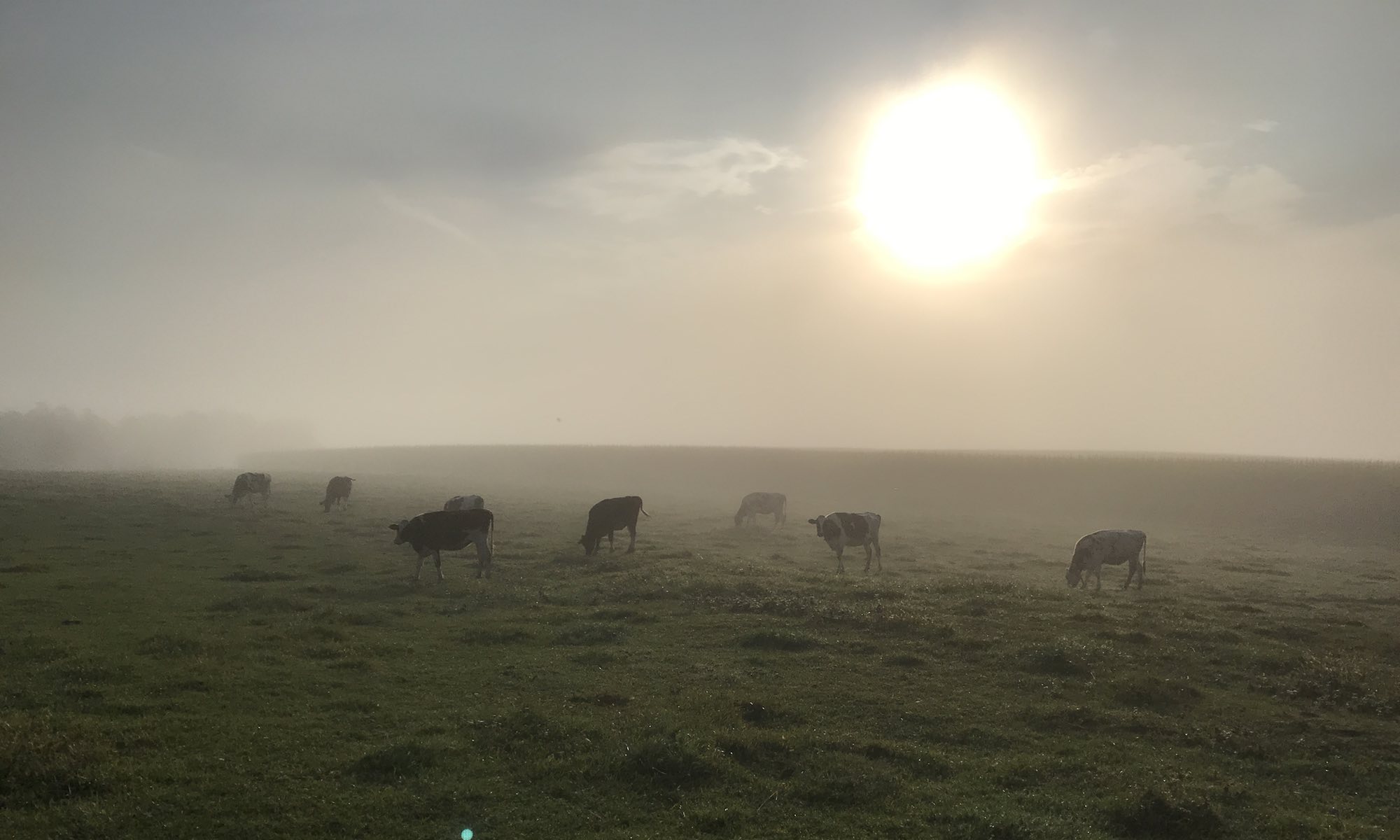
I am brewing version 1.2 (Chinook) of my House Ale today. The weather is odd this morning. There is a thick fog and I am having a hard time waking up.
Continue reading “(24) Friday, June 17 2011, Brew Day – BVBHA1.2”
Humanity’s Capacity to Change
Never underestimate humanity’s capacity to change and adapt. Unless it’s whining about insignificant bullshit. We’ve got that one down.less than a minute ago via Twitter for Android Favorite Retweet Reply
Miss_Cook
2CELLOS (Sulic & Hauser) – Welcome To The Jungle
The Familiar Dot
“The familiar dot ‘.’ symbol from Internet addresses is used in this book to terminate sentences.” — Mr. Bunny’s Guide to ActiveXless than a minute ago via web Favorite Retweet Reply Joel Spolsky
spolsky
Water Lillies

(23) Memorial Day 2011 Brew Day – BVBHA1.1
7:40 Gas on.
8:11 Adding strike water to mash tun. Temperature 170 °F.
8:16 Strike water stabilized to 165 °F.
8:20 Grains mixed into mash.
8:26 Mash stabilized at 155 °F. 6.87 gallons (26 liters).
8:57 Just realize that I forgot to add my mash salts. I stirred them in and remeasured the temperature at about 152 °F. Also, the volume is dropping which seems to indicate that the grain is absorbing more as time goes by.
9:20 Beginning vorloff for first runnings. Volume is 6 gallons in mash tun.
9:27 Boil salts are in the kettle. Collected just shy of 3.5 gallons. Gravity of first runnings was 1.075 (1.065 at 118 °F).
9:30 Flame is on under the first runnings while collecting the second. Sparge water temperature is 180 °F. The batch temperature when the sparge water was added is 167 °F.
9:40 Collected just shy of 3.5 gallons for the second runnings for a total of about 6-15/16 gallons in the kettle. Second runnings gravity was 1.029 (1.012 at 143 °F). Boil gravity is 1.052 (1.050 expected).
9:55 Boiling. Waiting for hot break.
10:00 Bittering hops added.
10:19 Smacking yeast packs. One manufactured on 5/4 (78% viability). The others on 5/16 (87% viability). Together providing 252 billion cells. The recipe calls for 225 billion.
10:45 Flavor hops added. Immersion chiller in. Irish moss in.
10:50 Yeast nutrient in.
11:00 Aroma hops added. Flame out. Lid on loosely. Letting hops steep for 20 minutes.
11:20 Started chilling and lifted hop bag to drain.
11:47 Wort chilled to 68 °F. Turning off and removing chiller. Removing hop bag. Stirring to form whirlpool and letting the wort settle for 20 minutes.
12:09 Taking original gravity sample and draining the kettle to the carboy. Original volume is 5.5 gallons.
12:17 Original gravity is 1.059 (1.056 @ 82.4 °F) as expected.
12:25 Kettle is drained. Rocking carboy to aerate wort.
12:36 Carboy in fridge. Yeast pitched. Temperature is 72 °F. Set for 68 °F. When it reaches that temperature, I will lower it to 64 °F.
Wednesday Evening, June 1 Added dry hops.
Monday Evening, June 6 Final gravity is 1.016 (8.3 Brix). Expected 1.018. 5.7% ABV. 72% ADF. Cold crashing to 38 °F.
Saturday, June 11 Kegged. Gravity 1.015. Added a hop bag containing 15.4g Chinook 11.4% AA, 14g Chinook 11.1%AA, and 28.9g Cascade 7.1%AA. So, that’s about an ounce each of Chinook and Cascade. Carbonating to 2.3 volumes (15 psi at 50 °F).
I sampled the beer while testing the carbonation in the keg. I did detect a low level flaw. While reading the notes from Wyeast, I found the following:
A thorough diacetyl rest is recommended after fermentation is complete.
Yeah… I didn’t do that. I cold crashed right after fermentation completed. Next time, I will let the beer sit warm for a few days while the yeast cleans up after itself.
Friday, June 23 I am going to say this beer is at its peak, 12 days after packaging. The last one was 19 days.
Sunday, July 3 Kicked. Good to the end.
Brush Valley Brewing House Ale v 1.1
Tomorrow I am going to make the first revisions to my house ale recipe.
The changes in this recipe are:
- Adding Irish Moss
- Adding Brewer’s Choice™ Wyeast Nutrient Blend
- Using Wyeast 1968 London ESB Ale™ yeast, rather than Wyeast 1056 American Ale™
- Because I am changing the yeast, I will also be raising the fermentation temperature from 62 °F to 66 °F
These are also a couple of procedural changes:
- Adding all of the mash water at once and stabilizing at the strike temperature
- Fermenting in a refrigerator — I built a plywood stand for the fermentor to sit on and switched my controller from heating to cooling mode
Tonight I set up my brew stand. I measured out my mash and sparge water. I have my mash tun and fermenter standing by. I weighed and ground my grains and measured out my three hop additions as well as my mash and boil salts. I rounded up my Irish Moss and my yeast nutrient. I’m sure I’ll think of some things I have forgotten when I finally need them. For now, I think I have enough of a head start to call it an evening.
Tasting Notes on BVB House Ale v 1.0
This was not supposed to be one of those “Wow!” beers, and it is not. It is a good tasting, smooth, creamy beer, with a nice citrus aroma and flavor, a good malt backbone and some sweetness to offset the bitterness of the hops. It does all of that and I am quite pleased.
That is not to say it is perfect. It is not.
There is a tremendous amount of yeast still in suspension.
I wanted to play with different yeast varieties, but I think I need to try to address the flocculation of the yeast first.
Wyeast 1056 (WLP001) typically exhibits good flocculation — Wyeast describes it as medium to low.
I had thought that my adjusted water and all-grain recipe would provide enough nutrients to not require supplementation or assistance, but there are two things that I could try in future brews.
First, I have some Brewer’s Choice™ Wyeast Nutrient Blend. It could be that the yeast is simply missing something it needs. There were no off flavors that would have indicated stressed yeast, but perhaps whatever is needed to allow good flocculation does not impact flavor when it is missing.
If that does not work, I also have some Whirlfloc tablets. I have this belief that they should not be necessary. James Spencer of Basic Brewing Radio and Chris Colby of Brew Your Own magazine did a collaborative experiment to demonstrate the effects of Irish Moss — the source of the carrageenan in Whirlfloc — that I felt showed minimal impact to the clarifier. Besides, they are intended to bond with positively charged proteins, rather than yeast.
If none of that works, I may have to crash cool my fermenter before racking to the keg.
When I get around to experimenting with the yeast variety, I have in mind trying both 1968 (WLP002) and 1098 (WLP007). In particular, 1968 exhibits very high flocculation. It does not attenuate quite as well, so it may be slightly sweeter. It also has a higher temperature range, so I might have to go with 64 °F fermentation instead of 62 °F.
Update 3/24/11: I believe this beer is just peaking. It is just slightly too bitter — that is, slightly too much contribution from the first addition, it is not too hoppy. Apart from that it is nicely smooth. A bit hazy, but the yeast seems to have finally dropped.